Don’t Get Fooled by the Supermarket: The Truth About the Ground Beef You’re Buying
That bright red color isn’t always what you think it is.
The Photo That’s Making People Think Twice
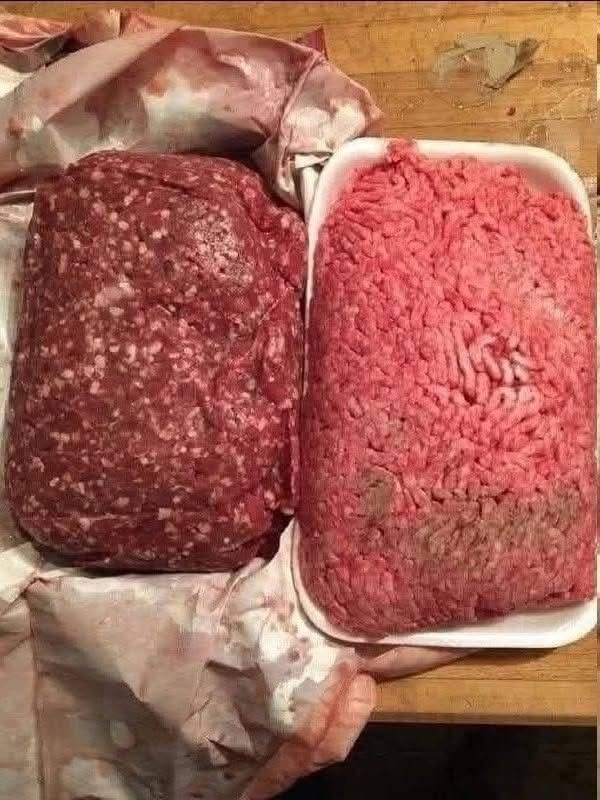
Two packages of ground beef, sitting side by side. Both look like regular ground beef from the store — but they couldn’t be more different. The one on the left is dark, rich, and naturally colored. The one on the right is bright pink-red, almost too perfect looking.
So what’s the difference? And which one should you actually be buying?
The answer might change the way you shop for meat forever.
What Supermarkets Don’t Tell You About Ground Beef
Most people assume that bright red ground beef means it’s fresh. In reality, that color can be completely artificial — the result of packaging techniques and additives designed to make meat look more appealing on store shelves, even when it isn’t the freshest product.
Here’s what’s really going on:
1.  Modified Atmosphere Packaging (MAP)
Most supermarket ground beef is sealed in packages filled with a mixture of gases — typically high levels of carbon monoxide (CO) or oxygen — that keep the meat looking bright red for weeks. Carbon monoxide binds to the meat’s myoglobin protein, locking in that cherry-red color permanently, even after the meat has started to degrade.
This is completely legal and widely used. But it means the color you’re seeing tells you nothing about how fresh the meat actually is.
2.  What the Dark Color Actually Means
That darker, purplish-brown ground beef you see on the left of the photo? That’s what fresh, naturally-colored meat looks like when it hasn’t been treated with gas or additives.
Fresh meat that’s been cut and exposed to air briefly turns a bright red — this is normal. But meat that hasn’t been artificially treated will gradually turn darker as it oxidizes. Paradoxically, a darker color can mean less chemical intervention, not spoilage.
The key difference:
- Bright red + gassed packaging = artificial freshness appearance
- Dark red/brown on the surface = natural oxidation, often fresher and less processed
3.  Pink Slime — The Ingredient They Tried to Hide
You may have heard of “lean finely textured beef” — better known as pink slime. This product is made from the fatty trimmings left over after processing beef. Those trimmings are heated to separate the fat, then treated with ammonium hydroxide gas to kill bacteria like E. coli and Salmonella.
The result is added into ground beef as a filler — often making up 15–25% of the product — without being clearly labeled. After public outrage in the early 2010s, many retailers stopped using it, but it hasn’t disappeared entirely from the market.
4.  What “80/20” and Other Labels Really Mean
Ground beef labels like 80/20, 85/15, or 90/10 refer to the ratio of lean meat to fat. But they don’t tell you:
- How old the animal was
- What part of the cow was ground up
- Whether trimmings from multiple animals were mixed together
- Whether it was grass-fed or grain-fed
- Whether additives or fillers were used
A package labeled “80/20 Ground Beef” could contain meat from hundreds of different cows processed in multiple facilities across the country.
5.  The “Sell By” Date Trick
Supermarkets often repackage meat that’s approaching its sell-by date into new packaging with a fresh label. This is legal as long as the new date is accurate — but it means the meat sitting in that shiny new tray may have been ground days ago.
Always check:
- The grind date, not just the sell-by date
- Whether the package has been vacuum sealed vs. foam tray packaged (vacuum lasts longer)
- If the label says “previously frozen” — that resets the clock
6.  Grass-Fed vs. Grain-Fed: Why It Matters
| Grass-Fed | Grain-Fed | |
|---|---|---|
| Color | Darker red, naturally | Bright red, often gassed |
| Fat | Yellow-tinted fat | White fat |
| Flavor | Richer, more complex | Milder, fattier |
| Nutrition | Higher omega-3s, CLA | Higher in omega-6s |
| Price | Higher | Lower |
| Where to find | Butcher shops, farmers markets | Most supermarkets |
Grass-fed beef tends to be darker because the animals eat a natural diet that affects myoglobin levels in the muscle. If your “fresh” beef is too uniformly bright red, that’s actually a red flag.
How to Buy Better Ground Beef: 7 Practical Tips
For Complete Cooking STEPS Please Head On Over To Next Page Or Open button (>)