Although this type of examination is performed with the utmost care and is becoming less uncomfortable, it is still considered potentially painful and embarrassing due to its undeniably invasive nature. A colonoscope, a flexible tube equipped with a microcamera, is manually inserted into the anal canal.
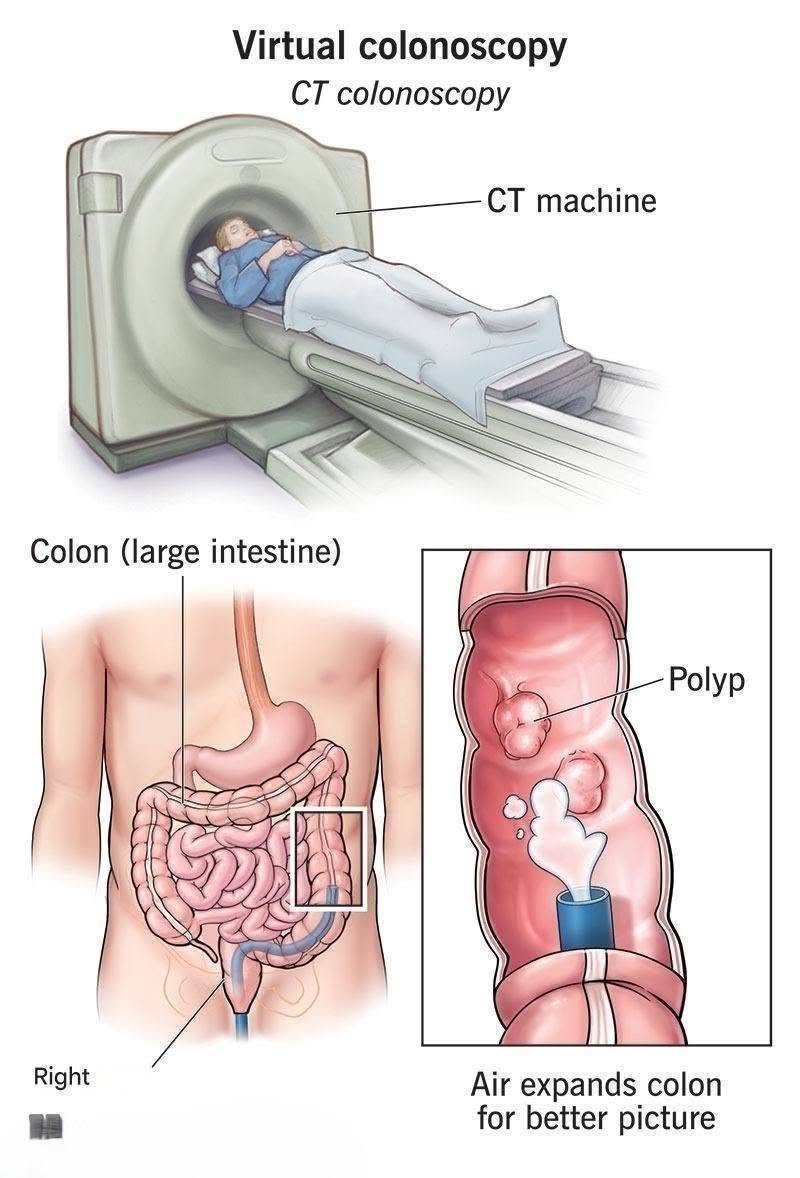
Medicine has continued to make significant progress in this area. Regarding colonoscopy, a major innovation has recently emerged: virtual colonoscopy. Let’s see what it involves. Virtual colonoscopy is a non-invasive radiological technique that allows visualization of the colon wall without an endoscope. It makes the examination much less invasive than a traditional colonoscopy, while providing much more accurate results.
See the next page on the next page
This technique is used when traditional procedures are impossible, for example, in cases of serious conditions preventing access. Virtual colonoscopy offers a more comprehensive view of the patient’s condition by evaluating the digestive tract upstream of any obstruction or subocclusive lesion.
To explain this technique in detail, it can be defined as an endoscopic procedure performed using 3D computer reconstructions after a simple scan. The computer creates a graphic animation that shows images of the colon’s mucosal surface with equal, or even greater, precision than a traditional colonoscopy.
Virtual colonoscopy is recommended as a screening method, particularly for people over fifty who are considered at risk or who have already undergone endoscopic polypectomy and require further examination.
Its only drawback compared to traditional colonoscopy is that, by its very nature, it does not allow for biopsies. Therefore, it is not recommended for patients at risk of developing polyps or colorectal cancer, in whom the traditional endoscopic probe allows for immediate removal. Of course, your specialist will determine the most appropriate technique for your specific case. It is important to note that technological and medical advancements are ongoing.
For Complete Cooking STEPS Please Head On Over To Next Page Or Open button (>)